Sunday, 29 January 2012

Does this common substance make you fat?

Natural Alternatives Including Stevia
by Mike Geary, Certified Nutrition Specialist, Certified Personal Trainer
Hey there, it's Mike again from TruthAboutAbs.com & Busy Man Fitness .com with your latest Lean-Body Secrets Ezine.
I wanted to talk about artificial sweeteners today because I've noticed that there's a lot of confusion and misconceptions revolving around these non-caloric sweeteners. Artificial sweeteners and the huge list of products sweetened with them are marketed to you relentlessly as "healthy foods" or "healthier" than sugar or corn syrup sweetened products. But are they really?
Just to clarify, some of the most popular artificial sweeteners on the market today are:
  • Splenda (sucralose)
  • Aspartame
  • Saccharine
  • Acesulfame Potassium (aka - acesulfame K)
These artificial sweeteners are used in abundance in almost every "diet" drink, "lite" yogurts, puddings, and ice creams, most "low-carb" products, and almost all "reduced-sugar" products. Heck, even most protein powders are loaded with artificial sweeteners too (just look on the ingredients and you'll usually see one of them).
Splenda is probably one of the worst offenders of claiming to be "healthy" as they say that it's made from real sugar. Don't be fooled! It's still an artificial substance. What they don't tell you is that Splenda is actually a chemically modified substance where chlorine is added to the chemical structure, making it more similar to a chlorinated pesticide than something we should be eating or drinking.
This is one of the biggest misconceptions that I see all of the time and it saddens me to see so many people poisoning their family with dangerous artificial sweeteners like splenda, while falsely thinking they're doing something healthy.
The truth is that artificial sweeteners are not even close to being healthy, and as you'll discover in a minute, can easily be just as bad for you, if not worse, than sugar or corn syrup. Most people think that they are doing something good for themselves by choosing the "diet" drinks or "lite" yogurts compared to the sugar-laden versions, but the problem is that you're exposing yourself to a whole new set of problems with the artificially sweetened drinks and foods.
I know you're probably frustrated by all of the contradicting messages you hear each day about which foods are good for you and which are bad. I'm sure just today you probably saw some clever ad or commercial somewhere screaming health benefits for a food product that is loaded with artificial sweeteners. Don't worry. Just stick with me and I'll get past the marketing hype for you and decipher the truth. I'll also give you some ideas for great alternatives to artificial sweeteners as well as alternatives to sugar or corn syrup sweeteners.
The fact is, artificial sweeteners vs. sugar or corn syrup is really just a battle between two evils. Which evil is worse?
I'm sure you already know the problems with sugar or high fructose corn syrup sweetened products. The excess empty calories, blood sugar spike, and resulting insulin surge this creates in your body not only promotes fat gain, but also stimulates your appetite further, making things even worse.
On the other hand, artificial sweeteners save you calories, but there's growing evidence that they can increase your appetite for sweets and other carbohydrates causing you to eat more later in the day anyway. Therefore, you don't really save any calories at all. Also, studies have shown that artificial sweeteners can stimulate high insulin levels in your body too, which again can promote fat storage.
All of the 4 artificial sweeteners listed above are nasty chemicals that the human body is simply not meant to ingest. However, most of us are ingesting a whole lot of these chemicals on a daily basis. Aside from the problems I touched on so far, other health issues that have been related to artificial sweeteners in scientific studies as well as observations are:
  • some have been linked to potential cancer risks
  • negative effects on the liver, kidneys, and other organs
  • stimulating cravings
  • gastrointestinal problems
  • developmental problems in children and fetuses
  • headaches
  • and too many more issues to list
Now some of the above potential health problems are definitely not proven as fact in studies. However, some of them have been shown in animal studies given high doses. Also, if you do some research, you'll find hoardes of people that attribute the use of artificial sweeteners over the years with all sorts of illnesses in themselves or in family members.
Regardless of the fact that any real health problems for actual human use are not proven yet, I don't know about you, but I'd rather protect myself and my family and steer clear of these possibly dangerous artificial chemicals.

Of course, despite all of the health issues potentially associated with artificial sweeteners, the companies that sell the products will continue to claim that they are fully safe. Don't believe them!  The bottom line is that the body was not designed to deal with foreign substances like artificial sweeteners. Take my word on that one.
So what are your options for alternatives?
Well, your best alternatives for sugar or corn syrup are either raw honey, organic maple syrup, or even a little-known high antioxidant syrup called sorghum syrup (common in the southern US). Even though these alternatives still have the same amount of calories as sugar or corn syrup... honey, organic maple syrup, and sorghum syrup actually provide some nutrients and antioxidants, so it's not just empty calories. Empty calories such as white refined sugar stimulate your appetite more because your body is lacking nutrients.

Now you're probably thinking that you'd like to still save on calories but avoid the nasty artificial sweeteners. Good news... You can!

You've probably seen me reference this natural sweetener in a lot of my recipes. It's called Stevia. I've been using it for years as an alternative sweetener when you still want to save a little on calories and sugar but don't want to harm your health with artificial sweeteners.

Stevia is not artificial like the other chemical sweeteners I mentioned above. Stevia is a natural non-caloric herb that's been used for thousands of years in some parts of the world. It is a South American herb and when dried into a powder, has a sweetness about 200-300 times stronger than sugar.
One problem I've noticed with using Stevia is that the pure powder is a very powerful sweetener, so you can easily use too much. However, I've found some good Stevia products that use a bulking agent added so that you can measure out the stevia powder in direct comparison to measuring sugar.
I've yet to see any negative reports or health concerns regarding stevia and only positive potential health benefits. I definitely give Stevia my seal of approval. Do yourself a favor (and your family), and if you are currently an artificial sweetener junkie, please consider switching to stevia.
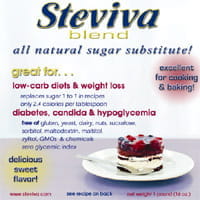
One of the best products I've found over the years is made by a company called Steviva. They have an excellent stevia product blended with another natural sweetener called erythritol. I suggest giving it a try! Just look for the "Steviva Blend". You can use it in your coffee or tea, to sweeten up plain yogurt, added to smoothies for extra sweetness, on cereals or oatmeal, in baking, or where ever else you might need a sweetener but want to reduce the sugar content.
If you want to grab some, here's the link:
Steviva Stevia Blend
Well, that's it for today. I hope you enjoyed this important discussion. Feel free to copy/paste this link and email it to anybody you know that might be overdoing the artificial sweeteners.
If you liked this article, please click the "Like" button below for Facebook:


Tuesday, 17 January 2012

2 things that will change your life in 2012


2 Tips That Will Change Your Life (Seriously)
by Mike Geary, Certified Nutrition Specialist, Certified Personal Trainer
Author:
The Truth about Six-Pack Abs

achievementI was just recently reminded of these 2 tips while reading a great book... Bill Phillips newest best-seller: Transformation... which by the way, I just had the pleasure of meeting Bill in person a few weeks ago, and this book is actually about WAY more than just fitness or nutrition...actually 99% of the book is about transforming your entire being, your mind... your entire life. It's powerful stuff, and a great read.
Now I will say that I think most of us, already know these 2 tips below, but may not practice them as often as we should... and I know personally, I found this to be a great reminder of how powerful these are and how they can change your life.
1. In Chapter 8 in Bill's book, Transformation, he starts off this chapter with a shocking story about a man named Azim who tragically had his 20-year old son murdered by a teenage gang member 5 years prior. The story ends up a bit unfathomable to most of us, as it turns out that Azim actually forgave his sons killer, in what can only be considered one of the most courageous acts of compassion and forgiveness than most of us could ever even contemplate.
After all, how many of us walk around for years holding grudges with a friend or family member over something silly and stupid that means nothing in the big picture of our lives? However, this courageous father found it in his heart to forgive his sons murderer, the ultimate act of forgiveness.
For most of us, forgiveness will not be for such extreme events...instead, it will be for smaller things that we've been holding deep inside (bottled up inside, causing us hidden stress) against a particular person, maybe a sibling, a parent, a friend, or a spouse. But what we don't realize is that these bottled up grudges harm OUR health, and do very little to "punish" the other person.
Bill points out a great saying "Resentment is like drinking poison and waiting for your enemy to die". Yes, you're harming yourself more than than the other person by holding onto resentment.
Another great saying to always keep in mind that will change the way you treat other people who may have hurt you: "To err is human; to forgive is divine".
Yes, we all make mistakes... and if you think back to the story about the father that forgave his sons killer... Was that teenage gang member really an evil person deep down to his soul? Or was he a victim of society, which led him into the gang lifestyle? There's always more to the story than what's on the surface.
The most important thing we need to realize is that holding onto anger, resentment, or grudges is scientifically proven to harm our health and make us die earlier. Bill points out a study in the Journal of Epidemiology & Community Health involving 2,755 people over 10 years. According to the study that Bill summarizes, "Those who repressed anger and held resentments were found to be twice as likely to die of a heart attack compared to people in the study who were able to process and let go of negative feelings."
Puts you in the spirit to forgive someone, doesn't it.
Another VERY important thing that Bill points out... Holding onto a grievance doesn't give you control over the offender, and it doesn't "punish" them; it gives THEM control over you, and punishes YOU, because you're the one holding onto the health-harming stress and lack of peace of mind.
A few more great lines I loved from this chapter in Bill's book:
"Forgiveness is not done out of weakness; it is an act of strength and courage."
"Forgiveness is something that happens inside of you. It doesn't mean you're saying what happened to cause a resentment wasn't wrong or that it didn't matter. It means... I choose to let go of this negative feeling towards the person whom I perceive has hurt me."
"...as long as any part of our mind or consciousness is engaged with unresolved feelings from the past it will require us to expend valuable energy on it."
"...as long as we hold onto a grievance, we are chained to the past situation and the offender."
"...granting someone true forgiveness is not based on any conditions. The forgiven don't have to deserve it or earn it. It's an act of grace and mercy on your part."
Just think... if we all kept these guidelines in the front of our minds daily, wouldn't the world be a MUCH better place, with less stress, fighting, hatred, resentment, and pent up anger? I sure think so.

2. This second tip is no less important than the first... and it is VERY powerful in helping you to live healthier and happier.
This is another important tip to living life to the fullest that I was reminded of when recently reading Bill's book, Transformation... The story starts off with a day that Bill had the pleasure of meeting fitness icon Jack Lalanne and a reporter from USA Today interviewed them both.
One of the most important questions that the news reporter asked Jack in the interview was "What should people who want to live a healthy life do first thing in the morning?"
The reporter had been expecting a specific tip about exercise or nutrition first thing in the morning... but instead, Jack replied with an answer that carried some very powerful wisdom... he replied "A healthy person always starts the day by counting their blessings."
What Jack Lalanne understands, that so many people don't, is that gratitude affects not only the health of your mind, but that of your body and your entire well-being too.
I think one of the most important daily rituals that anybody can take up is to lie in bed for 1-2 more minutes after waking up in the morning... and consciously bring to mind all of the things in his/her life that they are thankful for. It's also important to write down what you are grateful for in your life.
I know that everybody has struggles, but everybody also has things that they should be grateful for. This one daily ritual can literally change the biochemistry of your body and mind to put you into a more energetic and "feel good" state about your life, and thereby achieve more of your goals...
Don't believe me?
Well, according to Bill in Chapter 16 of Transformation, Dr. Robert Emmons, PhD, from the University of California Davis was involved in a large research project on gratitude, and here were some of his discoveries:
"Those who kept gratitude journals on a weekly basis exercised more often, felt better physically, and had a more positive mindset."
"Study participants who kept gratitude lists were found to be more likely to have made progress towards important personal goals (academic, interpersonal, and health-based) over a 2-month period."
"A daily gratitude intervention (taking time to focus on and write down things to be thankful for) produced higher levels of alertness, enthusiasm, determination, attentiveness, and energy."
"Those who participate in a daily gratitude exercise have lower levels of depression and stress and are more likely to offer emotional support to others and help them make it through their difficulties."
The bottom line... although you may have heard about practicing daily gratitude in the past, are you really doing it daily? If not, you're missing out on the health benefits, increased energy, better sleep and mood, goal achievements, and just living healthier and happier!
So there you go... I told you that these 2 tips today would be powerful in helping to improve your life!
If you haven't yet read Bill's book, Transformation, I'd highly recommend it. The book started off a little slow, and I kept thinking to myself, "I know all of this already"... but then about halfway through, the chapters just kept getting more powerful, and I realized there were a lot of things I needed to be reminded about and start practicing more often.
Please share the gift of forgiveness and gratitude with your friends and family by clicking "Share" below for facebook or twitter. It's such an important message to share with others, and benefits everyone. I think they will appreciate you sharing this article with them!


If you haven't seen this yet, watch this video below to see a powerful method of achieving your goals (whether they are fitness, relationship, or financial goals), and also 1 major thing that's been holding you back...


Monday, 2 January 2012

Your cooking Oils vs Healthy vs unheathly


Your Cooking Oils - Healthy vs Unhealthy

(the truth may surprise you!)

Some of these oils are healthy and some are VERY unhealthy -- soybean oil, olive oil, coconut oil, corn oil, etc... Let's take a closer look.
by Mike Geary, Certified Nutrition Specialist, Certified Personal Trainer
Author of best-selling program: The Truth about Six-Pack Abs

Today, I wanted to give you my take on a confusing subject to most people:
...why some oils and fats you may use in cooking, baking, or other food use are actually harmful to your body, and why some are healthful.
Here's the deal...
A lot of people seem to think that anything labeled as "vegetable oil" is good for you. NOT A SHOT!
Most of what is labeled as "vegetable oil" is simply heavily refined soybean oil (processed under high heat, pressure, and industrial solvents, such as hexane)... sometimes perhaps it may also be heavily refined cottonseed, safflower, corn, grapeseed, or other oils too.
In most instances, almost all of these processed oils are NOT HEALTHY for you. I'll explain why below...

If you buy processed food or deep fried food, you can usually be certain that these unhealthy oils are used to prepare your foods (or worse, it may use hydrogenated versions of these oils... aka - trans fats).

You may have even bought some of these oils for your own cooking or baking at home.
The problem with soybean oil, cottonseed oil, corn oil, grapeseed oil, safflower oil, and other similar oils is that they are mostly composed of polyunsaturated fats (the most highly reactive type of fat) which leaves them prone to oxidation and free radical production when exposed to heat and light.
Processed polyunsaturated oils are the most inflammatory inside our bodies because of their high reactivity to heat and light. This inflammation is what causes many of our internal problems such as heart disease, diabetes, and other degenerative diseases.
Note: It's ok if a polyunsaturated fat source isn't processed such as in whole foods like various nuts and seeds... In that case it's usually not inflammatory (as long as it's not been exposed to high heat), and is a great source of healthy polyunsaturated fats for you. By the way, omega-6 and omega-3 fatty acids are both polyunsaturates, and a healthy balance of approx 1:1 to 3:1 ratio of omega-6 to omega-3 is considered healthiest. Your best bet is to choose raw nuts and seeds whenever possible to avoid the oxidation of polyunsaturated fats that can occur during roasting of nuts and seeds. Keep in mind though that some nuts are mostly monounsaturated, (for example, macadamias), so the issue of roasted vs raw nuts is less of an issue for highly monounsaturated nuts.
However, all of the vegetable oils listed above are generally heavily refined during processing, so that makes them already inflammatory before you even cook with them (which does even more damage).
Here's the actual order of stability of a type of fat under heat and light (from least stable to most stable):
1. polyunsaturated
2. monounsaturated
3. saturated

Here's something that mainstream health professionals will never tell you...
Saturated fats are actually the healthiest oils to cook with!
Why? Because they are much more stable and less inflammatory than polyunsaturated oils.
This is why tropical oils such as palm and coconut oils (and even animal fats such as butter) are best for cooking... they have very little polyunsaturates and are mostly composed of natural saturated fats which are the least reactive to heat/light and therefore the least inflammatory in your body from cooking use.
That's also why natural butter (NOT margarine) is one of the best fats for cooking. This all goes directly against what you hear in mainstream health talk... because most health professionals don't truly understand the biochemistry of fats, and falsely believe that saturated fats are bad for you... when in fact, they are actually neutral in most instances... and saturated fats from tropical oils are actually good for you as they contain mostly medium chain triglycerides (MCTs) which are lacking in most people's diets.
In fact, lauric acid is one of the abundant MCTs in tropical oils and is known to strengthen the immune system. Lauric acid is even being studied currently in medical studies for controlling contagious diseases.
To summarize... your best cooking or baking fats are generally butter or tropical oils such as palm or coconut oil. Olive oil (extra virgin preferably) is ok for lower cooking temps as it's mostly monounsaturated, so moderately stable. The mostly polyunsaturated oils such as soybean, grapeseed, cottonseed, safflower, etc, are the least healthy for cooking or baking.
My choices for top healthy cooking oils that I use:
  • Virgin Coconut Oil
  • Extra Virgin Olive Oil (only for low temp cooking)
  • Real Butter (grass fed if possible)
Of course, with all of that said... we should keep in mind that trying minimize our cooking with oils can help to reduce overall calories. Cooking with oils in moderation is ok and can actually help satisfy your appetite more, but be careful not to overdo it as the calories can add up fast.
Also, please don't be fooled by deceptive marketing claiming that canola oil is healthy for you -- it's NOT! If you enjoyed this article, feel free to share this with your friends or family on facebook, twitter, email, etc.


5 Foods that FIGHT Abdominal Fat

Popular articles:
The good carb, bad carbs, low carbohydrate confusion
7 Tips to NEVER get sick again
My Top 55 Lean-Body Foods


Unusual Tips to Lose Stomach Fat

Sunday, 1 January 2012

Excess Abdominal Fat is Not Only Ugly, but Extremely Dangerous to Your Health - This is More Than a Vanity Issue!

Share 327 

Excess Abdominal Fat is Not Only Ugly, but Extremely Dangerous to Your Health - This is More Than a Vanity Issue!
The difference between subcutaneous fat and the more deadly "visceral fat"


by Mike Geary, Certified Nutrition Specialist, Certified Personal Trainer
author of best-selling program:
The Truth about Six-Pack Abs


big stomach, visceral fatAlthough this picture depicts an extremely overweight man, this article applies to dangerous types of fat inside the bodies of both men and women... and this discussion also applies even if you only have a slight amount of excess stomach fat.
Did you know that the vast majority of people in this day and age have excess abdominal fat? It's true -- as much as 70% of the population in some "westernized" countries such as the US and Australia are now considered either overweight or obese. The first thing that most people think of is that their extra abdominal fat is simply ugly, is covering up their abs from being visible, and makes them self conscious about showing off their body.

However, what most people don't realize is that excess abdominal fat in particular, is not only ugly, but is also a dangerous risk factor to your health. Scientific research has clearly determined that although it is unhealthy in general to have excess body fat throughout your body, it is also particularly dangerous to have excess abdominal fat.
There are two types of fat that you have in your abdominal area. The first type that covers up your abs from being visible is called subcutaneous fat and lies directly beneath the skin and on top of the abdominal muscles.
The second type of fat that you have in your abdominal area is called visceral fat, and that lies deeper in the abdomen beneath your muscle and surrounding your organs. Visceral fat also plays a role in giving certain men that "beer belly" appearance where their abdomen protrudes excessively but at the same time, also feels sort of hard if you push on it.
Both subcutaneous fat and visceral fat in the abdominal area are serious health risk factors, but science has shown that having excessive visceral fat is even more dangerous than subcutaneous fat. Both types of fat greatly increase your risk of developing heart disease, diabetes, high blood pressure, stroke, sleep apnea, various forms of cancer, and other degenerative diseases.
Excess stomach fat has also been associated in studies with higher levels of C-reactive protein (CRP), an indicator of inflammation within the body that can lead to heart disease and other health issues.
Part of the reason visceral fat is particularly dangerous is that studies show that it releases more inflammatory molecules into your system on a consistent basis.
One of the major reasons that some people accumulate more visceral fat than others can be from a high carbohydrate diet that leads to insulin resistance over time (years of bombarding your system with too much sugars and starches for your body to properly handle the constant excess blood sugar) ... and studies show that high fructose intake particularly from high-fructose corn syrup can be a major contributor to excess visceral fat.
If you care about the quality of your life and your loved ones, reducing your abdominal fat (including reducing visceral fat) should be one of your TOP priorities! There's just no way around it. Besides, a side effect of finally getting rid of all of that excessive abdominal fat is that your stomach will flatten out, and if you lose enough stomach fat, you will be able to visibly see those attractive six pack abs that everyone wants.
So what gets rid of extra abdominal fat, including visceral fat?
Is there actually a REAL solution beyond all of the gimmicks and hype that you see in ads and on commercials for "miracle" fat loss products?
The first thing you must understand is that there is absolutely NO quick fix solution. There are no pills or supplements of any sort that will help you lose your abdominal fat faster. Also, none of the gimmicky ab rockers, rollers, or ab belts will help get rid of abdominal fat either. You can't spot reduce your stomach fat by using any of these worthless contraptions. It simply doesn't work that way.
The only solution to consistently lose your abdominal fat and keep it off for good is to combine a sound nutritious diet full of unprocessed natural foods with a properly designed strategic exercise program that stimulates the necessary hormonal and metabolic response within your body. Both your food intake as well as your training program are important if you are to get this right.
I've actually even seen a particular study that divided thousands of participants into a diet-only group and an exercise & diet combined group. While both groups in this study made good progress, the diet-only group lost significantly LESS abdominal fat than the diet & exercise combined group.
Now the important thing to realize is that just any old exercise program will not necessarily do the trick. The majority of people that attempt getting into a good exercise routine are NOT working out effectively enough to really stimulate the loss of stubborn abdominal fat. I see this every day at the gym.
Most people will do your typical boring ineffective cardio routines, throw in a little outdated body-part style weight training, and pump away with some crunches and side bends, and think that they are doing something useful for reducing their abdominal fat. Then they become frustrated after weeks or months of no results and wonder where they went wrong.
Well, the good news is that I've spent over a decade researching this topic, analyzing the science, and applying it "in the trenches" with myself as well as thousands of my clients from all over the world to see what works to really stimulate abdominal fat loss.
From my research, two of the most important aspects to getting rid of visceral fat are:
1. The use of high intensity forms of exercise and full-body resistance training. Low intensity cardio exercise simply isn't as effective for removing visceral fat in particular. High intensity exercise such as interval training or full-body weight training are very effective at helping to improve your body's ability to manage glucose and increases insulin sensitivity, a crucial step in removing visceral fat. These types of high intensity exercise routines are also very effective at increasing your fat-burning hormones and creating a hormonal environment conducive to burning off abdominal fat, including visceral fat.
2. In addition, it's vitally important to get blood sugar under control to help restore insulin sensitivity through the right nutrition. This means greatly reducing sugars and refined starches in your diet (including fully eliminating any use of harmful high fructose corn syrup!), and focusing more of your diet on healthy fats (such as avocados, nuts, seeds, coconut fat, olive oil, free-range eggs, fatty fish and fish oils, etc), as well as increasing protein and fiber intake. The standard diet recommended by the government, which contains an unnaturally high grain intake is NOT conducive to controlling blood sugar and reducing visceral fat!
Reducing grain-based foods in your diet and getting more of your carbs from veggies and high fiber fruits such as berries can go a long way to helping to solve this problem.
Learn the Truth about Losing Your Stomach Fat Permanently
program for losing abdominal fat
Add caption
You may not realize this, but the entire basis of my Truth about Six Pack Abs program is NOT about abs exercises... instead, it's actually about detailed strategies for both nutrition and exercise that maximize your ability to lose abdominal fat. The entire solution... all of the nutritional strategies, as well as training sequences, exercise combinations, and more have all been compiled in my Truth About Six Pack Abs Program in order to help you to burn stomach fat faster.
Keep in mind that the whole point of this program is NOT abdominal exercises (that is only a very small portion of it). The main point of this program is showing you the absolute most effective nutritional strategies for losing your stubborn abdominal fat, and maximizing a fat-burning hormonal environment in your body so you can get rid of that dangerous health risk, as well as get a flatter more defined midsection.
If you follow the guidelines, you WILL lose your belly fat that has been plaguing you for years. This is not guesswork... it is a proven system that works time and time again for all of my clients on every corner of the globe that actually apply these strategies. If you apply it, the results will come. It's really that simple.
One of the main reasons that most people fail in their fitness goals is that they have good intentions at first to adopt a new lifestyle, yet after a few weeks or months, they abandon their good intentions and slip right back into their old bad habits that gave them the excess body fat in the first place.
I want to help you succeed in finally getting rid of that extra abdominal fat that is not only UGLY, but also DANGEROUS. A lot of people have emailed my support team with questions about whether they need any special equipment for these workouts, if they're too old or too young for this program, if the diet tips will apply to them, etc. I've made a page that should answer all of your questions...